

Jeju Island
Jeju Weather Won't Ruin Your Trip — If You Plan Like This
Jeju's famously moody weather can unravel even the best-laid itinerary. Here's how to build a trip that bends with the forecast instead of breaking against it.
Odin Park
Jeju's island geography and centuries of distinct cultural life have given rise to a food scene that's unlike anywhere else in Korea. Here's a guide to the local dishes that go deeper than the tourist menu.
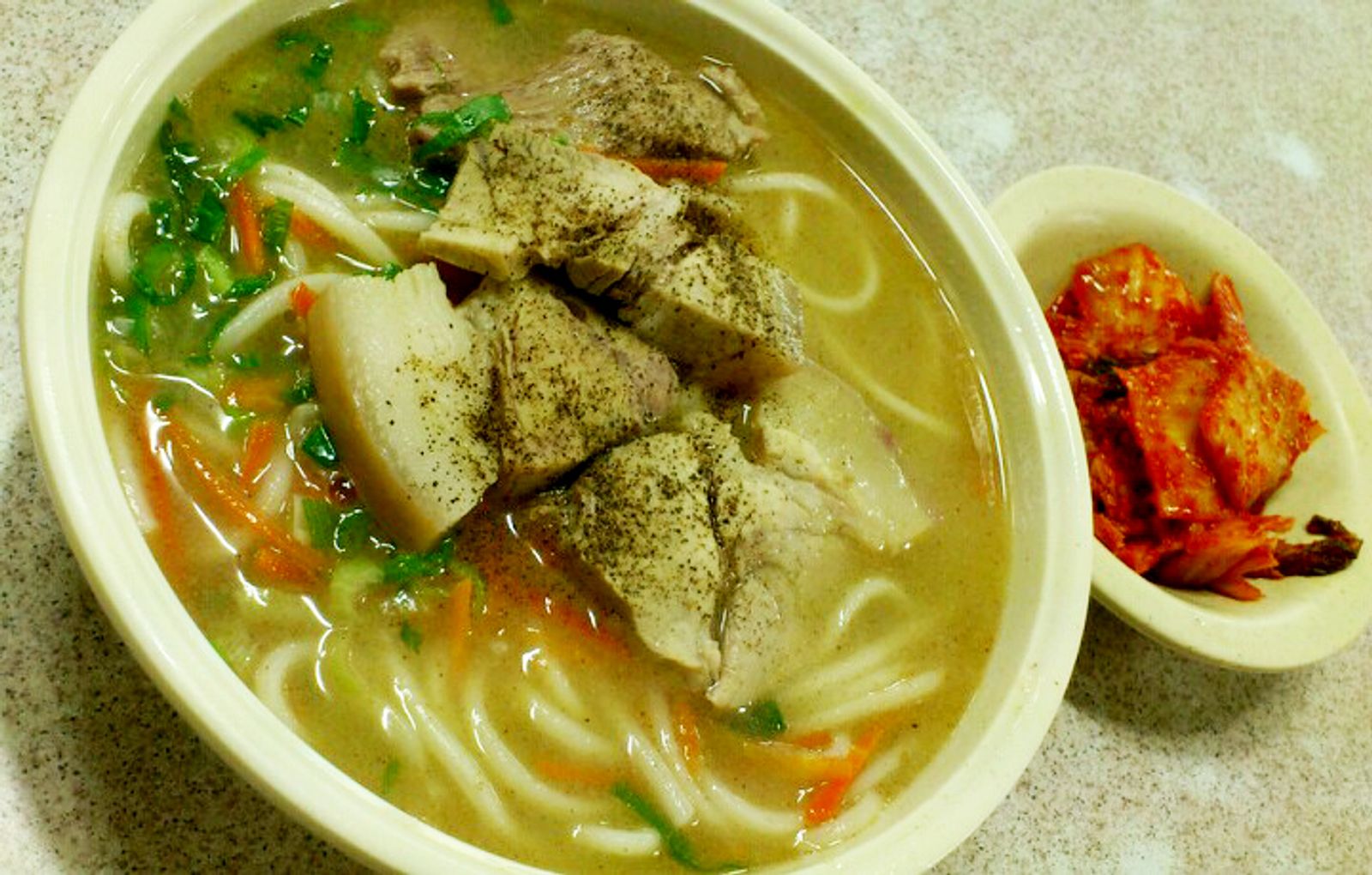
Jeju has always done things its own way. Cut off from the mainland for much of its history, the island developed a culinary identity shaped by the sea, the volcanic landscape, and the rhythms of its people — one that goes well beyond the black pork barbecue and braised hairtail fish that tend to dominate visitor itineraries. If you're willing to look a little further, here's what's waiting for you.
Gogi-guksu (Pork Noodle Soup)
This is Jeju's quintessential everyday dish — humble, deeply satisfying, and almost impossible to find on the mainland. Thick wheat noodles sit in a rich, milky broth made from pork bones and meat that's been simmered low and slow, then topped with slices of tender boiled pork. The soup is hearty and slightly sticky, with a savoury depth that creeps up on you. It originated as a celebratory dish served at weddings and village feasts, but today you'll find it everywhere from roadside canteens to dedicated noodle houses. Consider it essential.
Mom-guk (Seaweed and Pork Soup)
The name comes from the Jeju dialect word for *mojaban* — a type of brown seaweed (also called sargassum) that grows in the waters around the island. It's combined with pork broth to create a thick, dark soup that carries a distinctly oceanic fragrance. That unusual pairing of land and sea in a single bowl is unmistakably Jeju. Like *gogi-guksu*, it was traditionally prepared for feasts and memorial rites, and it remains one of the clearest expressions of the island's food culture.
Galchi-jorim and Galchi-guk (Hairtail Fish, Two Ways)
Hairtail fish (*galchi*) is caught in abundance in the waters around Jeju, and the island has developed its own distinct approaches to cooking it. The spicy braised version, *galchi-jorim*, is well-known across Korea — but the Jeju-style fish soup, *galchi-guk*, is something different: a clear, clean broth made with hairtail and napa cabbage that's much lighter and more delicate than the braised preparations you'd find on the mainland. The cooking technique here is tuned to highlight the fish's flavour without any trace of fishiness. It's a surprisingly elegant bowl of soup.
Okdom-gui (Grilled Red Tilefish)
The *okdom* — a pink-fleshed red tilefish found in Jeju's coastal waters — has been prized on the island for centuries, traditionally reserved for ancestral rites and tables set for honoured guests. The preparation is almost austere: the fish is salted and grilled, nothing more. But the flesh is silky-soft, with a clean, umami-rich flavour that needs no embellishment. If you see it on a menu, order it.
Bingtteok (Buckwheat Crepe Rolls)
Think of *bingtteok* as Jeju's answer to the humble wrap. A thin crepe made from buckwheat flour is filled with seasoned radish, then rolled up and served. The taste is quiet and unshowy — slightly nutty from the buckwheat, with a clean, mild filling — and that's precisely the point. This is traditional Jeju celebration food, served at festivals and holidays, and it speaks the island's culinary language fluently: nothing wasted, nothing superfluous.
Omegi-tteok (Jeju Millet Rice Cake)
These small, chewy rice cakes are made from glutinous millet flour, stuffed with sweet red bean paste, and rolled in soybean powder or red bean crumbs. They're slightly sweet, satisfyingly dense, and almost addictively chewy. You'll spot them in traditional markets, at roadside stalls, and in gift shops across the island — they've become one of Jeju's most popular edible souvenirs, and deservedly so.
Jeonbok-juk and Jeonbok Dolsot-bap (Abalone Porridge and Stone Pot Rice)
Jeju's *haenyeo* — the famous women divers who free-dive for seafood without breathing equipment — have harvested abalone from these waters for generations, and the island's abalone farming industry remains one of the most active in Korea. The result is abalone that's fresh, affordable (by the standards of a luxury ingredient), and cooked with real confidence. The porridge, *jeonbok-juk*, is made with abalone innards as well as the flesh, which turns it a beautiful deep green and gives it a rich, almost briny depth. The stone pot rice topped with a whole abalone is equally popular — the slightly scorched rice at the bottom of the pot is half the pleasure.
What unites all of these dishes is a quality that's harder to market than dramatic visuals or bold heat: a quiet, considered depth that comes from long tradition and good ingredients, not from spectacle. The most rewarding way to understand Jeju isn't always through its scenery — sometimes it's through a bowl of dark seaweed soup in a place that doesn't have an English menu. Seek these dishes out, and you'll leave knowing the island a little more honestly.
Jeju's famously moody weather can unravel even the best-laid itinerary. Here's how to build a trip that bends with the forecast instead of breaking against it.

Jeju Island is fast becoming one of Korea's most pet-friendly destinations — but travelling there with a dog or cat takes more planning than you might expect. Here's how to get it right.

Every rock, every crater hill, every handful of rice on Jeju tells a story — if you know how to listen. Here's how to walk this island the way it was always meant to be walked: slowly, and with wonder.