Jeju Island
Jeju Weather Won't Ruin Your Trip — If You Plan Like This
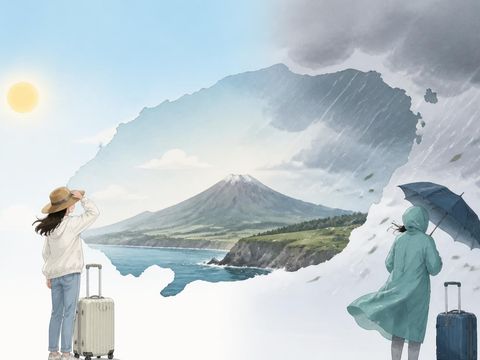
Jeju's famously moody weather can unravel even the best-laid itinerary. Here's how to build a trip that bends with the forecast instead of breaking against it.
Odin Park
Every rock, every crater hill, every handful of rice on Jeju tells a story — if you know how to listen. Here's how to walk this island the way it was always meant to be walked: slowly, and with wonder.
On Jeju, you can't afford to walk past a volcanic crater hill — an *oreum* — or a roadside boulder without a second glance. Something happened there. Someone, or something, left a mark.
In our last piece, we took in the whole island at a sweep. This time, we slow down and sink into the oldest layer of all: the myths and legends that shaped Jeju long before anyone thought to put them in a guidebook. A giantess who sculpted the land with her bare hands. A mother who gave her life — without even knowing it — to feed her sons. A goddess who climbed to the heavens just to bring back seeds for a hungry world. Jeju's stories are vast, heartbreaking, and tender all at once.
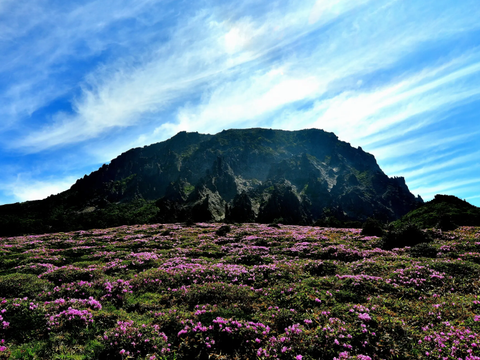
Every telling of Jeju's mythology begins in the same place: with Seolmundae Halmang, the great grandmother goddess. She was so immense that she simply gathered earth in the folds of her skirt and carried it out across the sea, piling it up until an island appeared. Wherever clods of soil slipped and fell from her hem, smaller hills rose up — the hundreds of *oreum* that now dot Jeju's landscape. The tallest heap of all became Hallasan, the volcanic mountain at the island's heart.
The legend doesn't stop there. At some point, the story goes, Seolmundae Halmang reached down and snapped off Hallasan's peak with her hand. The hollow left behind filled with water and became Baengnodam, the crater lake at the summit. The chunk she tossed away landed in the sea to the island's southwest, and that's how Sanbangsan — the great dome-shaped mountain near Sagye — came to be.
The next time you climb Hallasan or drive past the smooth curved silhouette of Sanbangsan, consider this: you are tracing the fingerprints of a giant. Creator, protector, and the island's absolute ruling deity, Seolmundae Halmang didn't just *make* Jeju. She *became* it.
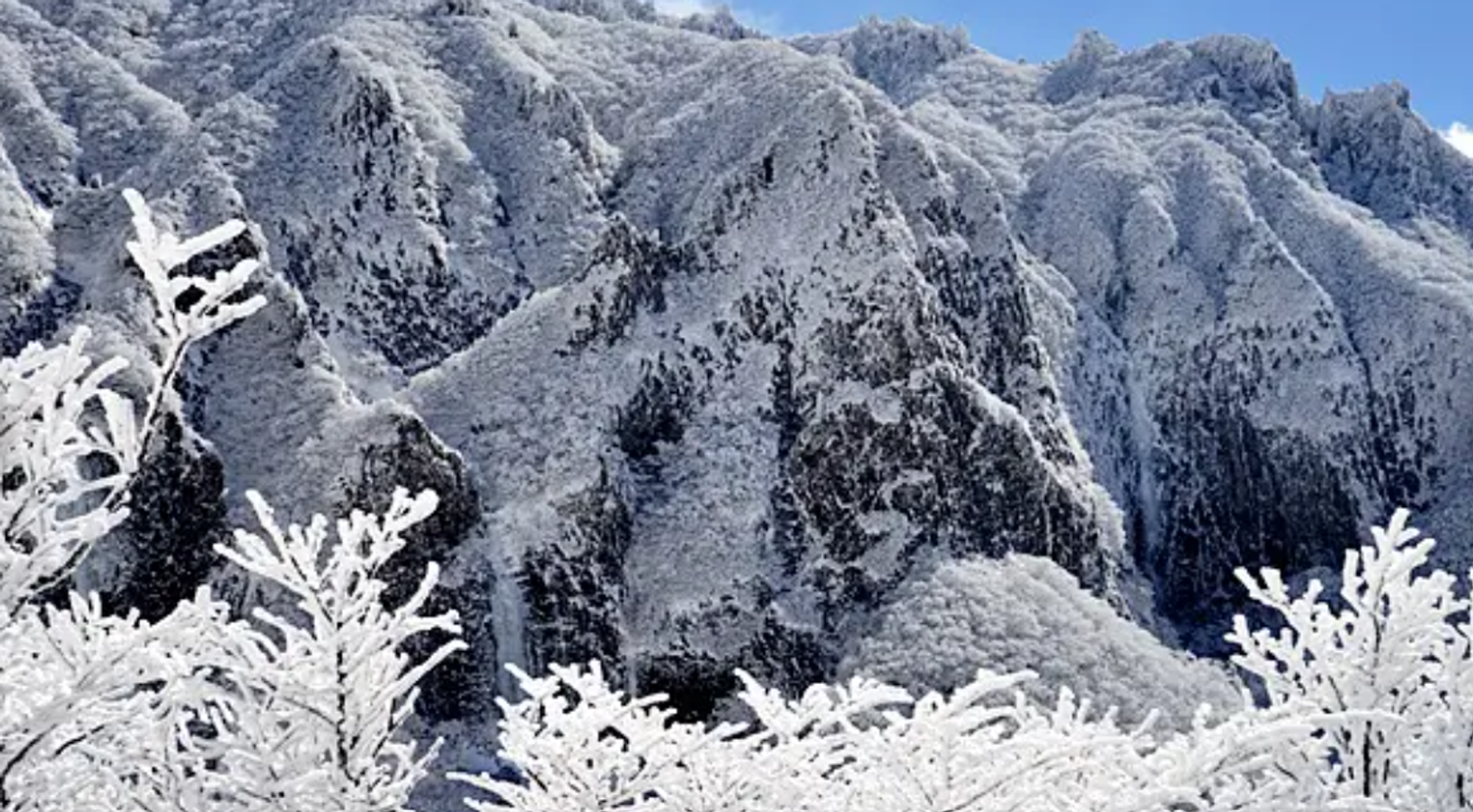
On Hallasan's southwestern flank, where jagged columns of volcanic rock rise like a frozen procession, sits Yeongsil — and it holds the saddest chapter in the Seolmundae Halmang story.
The goddess had five hundred sons. One year, famine gripped the island. The sons scattered in every direction to forage for food, while their mother stayed home and stirred an enormous pot of porridge to feed them when they returned. But she lost her footing, and fell into the cauldron.
Her sons came home, one by one, not knowing what had happened. They were hungry, and the porridge was warm, and they ate. It was the youngest son — the last to return — who found a bone in the pot. And in that moment, his brothers understood.
They collapsed where they stood, weeping, until grief turned them to stone. Those stone figures still stand in Yeongsil today, and people call them the Obaekjanggun — the Five Hundred Generals. There is something quietly devastating about this story: a mother who tried to nourish her children, and children undone by the very love they consumed. Jeju's myths speak of gods, but they always end up somewhere deeply, painfully human.
Jeju's divine world isn't built by one creator alone. The epic shamanic narrative known as *Sekyeong Bongpuri* — one of the island's foundational mythological texts — tells of Jacheongbi, a mortal woman with an extraordinary destiny. After a life of turbulent love and loss, she ascends to the heavens and wins the seeds of the five grains from the Jade Emperor. When she descends back to earth, she becomes the *sekyeong-sin*: the goddess who governs farming and the harvest.
Her presence is still felt in a humble, everyday gesture. Before eating lunch in the fields, Jeju farmers traditionally toss the first spoonful of rice onto the ground — an offering called *gosire*. It's a quiet thank-you to Jacheongbi, offered before every meal. The fact that a goddess born from myth is still acknowledged at the lunch table, in a muddy field, on an ordinary Tuesday — that is why Jeju's mythology feels alive rather than archived.
Once the land existed and the harvests were assured, it was time for people. The Samseong Myth — one of Jeju's founding origin stories — tells of three demigods who emerged from the earth itself, rising up from three holes in the ground on Hallasan's northern slope, at a site called Mohonghyeol. These three figures became the ancestors of Jeju's original clans: the Go, Yang, and Bu families, whose descendants still live on the island today.
The sequence here matters. A goddess shapes the land. The land feeds its people. And then, from the land itself, the first people are born. It's a creation story in which Jeju doesn't just exist — it generates life from within itself. From the very beginning, this island was a place where divine hands and human footsteps were pressed into the same soil.
The summit of Hallasan. The stone pillars of Yeongsil. A handful of rice tossed to the earth before lunch. Jeju is still mid-sentence, still telling its oldest stories to anyone willing to listen.
This summer, if you find yourself walking this island, try pausing at a random boulder or standing still at the foot of an *oreum*. There may well be a story sleeping right there beneath your feet, waiting for someone to hear it.
In the next instalment, we'll trace how these ancient myths have flowed forward into the symbols that define Jeju's modern face — the stern stone grandfather statues known as *dol hareubang*, the famous "island of three abundances," and what it all means for the place Jeju has become.
Jeju's famously moody weather can unravel even the best-laid itinerary. Here's how to build a trip that bends with the forecast instead of breaking against it.
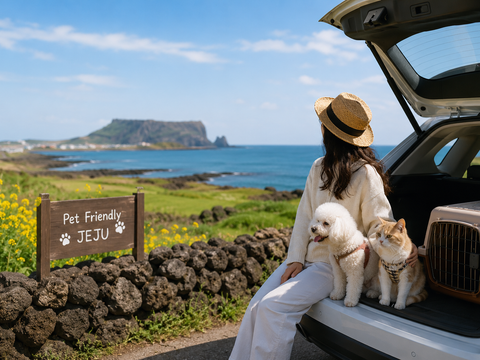
Jeju Island is fast becoming one of Korea's most pet-friendly destinations — but travelling there with a dog or cat takes more planning than you might expect. Here's how to get it right.
Jeju has always been there — but it greets you differently every time. This August, we're walking the island from the very beginning: its myths, its hidden lanes, and the food that tastes like survival turned into something delicious.