Jeju Island
Jeju Weather Won't Ruin Your Trip — If You Plan Like This
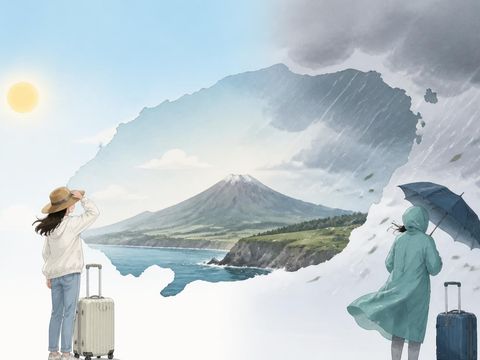
Jeju's famously moody weather can unravel even the best-laid itinerary. Here's how to build a trip that bends with the forecast instead of breaking against it.
Odin Park
Two nights isn't long on Jeju, but with the right route — west, then east, then south — you can take in volcanic craters, coral beaches, seaside cafés, and a proper black pork dinner without once doubling back on yourself.
Day 1: West Coast Sunsets and the Road into Jeju
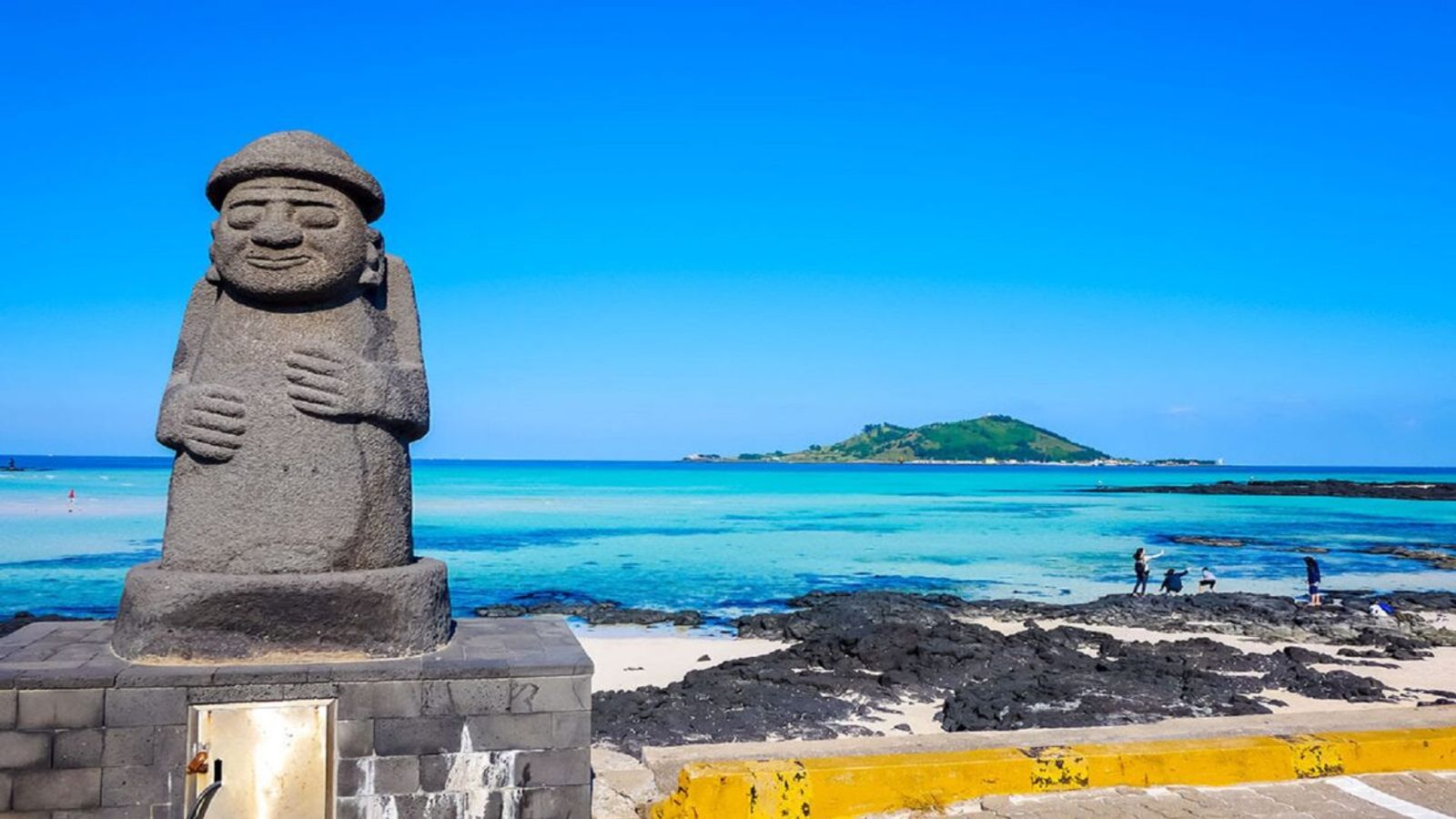
Pick up your rental car at Jeju Airport and head west straight away — it's the most logical place to begin, and the coast rewards you quickly. Your first stop is Hyeopjae Beach, one of the island's most photogenic stretches: shallow water in that particular shade of Caribbean green, white sand underfoot, and the small volcanic island of Biyangdo sitting just offshore like a stage prop. It's a gentle introduction to what Jeju does best.
For lunch, look for a spot near Hyeopjae serving *gogi guksu* — Jeju's beloved local noodle soup made with pork broth, a simple dish that locals are quietly serious about — or a *haemul ttukbaegi*, a bubbling seafood stew served in a stone pot. Either will set you up for the afternoon.
After lunch, head to Hallim Park or Osulloc Tea Museum, depending on your mood. Osulloc is the easier sell: a sprawling green tea plantation you can stroll through before settling into the tea café with a matcha latte or a slice of green tea cake. It's relaxed, pretty, and works well for families or anyone who needs a slower afternoon.
Save your energy for the evening. The Aewol Coastal Road is at its best around sunset, when the light turns the sea gold and the clifftop cafés fill with people who've figured out exactly where to be. Drive slowly, stop when something catches your eye, and find a window seat before the sun goes down. Stay the night in Aewol or near Hyeopjae — it keeps the next morning's drive sensible.
Day 2: East Jeju — Craters, Islands, and Cliffs
The east is a different kind of beautiful from the west, more dramatic, more volcanic. Start early at Seongsan Ilchulbong — Sunrise Peak — a UNESCO-listed tuff cone that erupted from the sea some 100,000 years ago and now rises 180 metres above it. The hike to the top takes between an hour and an hour and a half return, and the view from the crater rim — looking out over the patchwork fields below and the island of Udo in the distance — is one of those moments that makes the climb feel instantly worthwhile. Wear proper shoes; there are a lot of steps.
On the way down, detour to Gwangchigi Beach, a short drive from the peak. It's less visited than Jeju's famous swimming beaches but worth pausing at — a moody, atmospheric stretch where tidal flats meet open sea. For lunch, head to the seafood restaurants clustered around Seongsan Harbour.
If you have time (and energy), take the ferry from Seongsan Port to Udo, the small island just offshore. The crossing takes about fifteen minutes each way, and the island is easy to explore by bike or electric cart. Two beaches are worth seeking out: Seobinbaeksa, where the sand is made from crushed white coral and unlike anything else on Jeju, and Geommeollae Beach on the eastern side, with its striking black volcanic rock. And yes, have the peanut ice cream — *udo ttangkong* soft serve is the island's most insistently recommended snack, and it earns it.
In the afternoon, make your way to Seopjikoji, a headland on the southeastern coast where basalt cliffs drop into the sea and an old lighthouse stands at the point. It's a good place to walk slowly and feel the wind. From here, continue south towards Seogwipo for dinner. This is the night to eat properly Jeju: *heukdwaeji gui* (grilled black pork, the island's signature dish, richer and slightly gamier than the mainland version) or *galchi jorim*, a soy-braised hairtail fish that Seogwipo locals treat as a point of civic pride. Stay in or near Seogwipo city, or out towards Pyoseon — either puts you in good position for the morning.
Day 3: Seogwipo, Then Back to the Airport
The last day is a gentler loop around Seogwipo before the drive back north. In the morning, choose one of the city's two famous waterfalls: Cheonjiyeon or Jeongbang. Jeongbang has a particular distinction — it's one of the few waterfalls in Asia that falls directly into the sea — but both are worth your time if you have it. Either way, combine the waterfall visit with a wander through Lee Jung-seop Street (named after one of Korea's most beloved modern painters, who lived here briefly after fleeing the Korean War) or a browse through Seogwipo Maeil Olle Market, a daily covered market where you can pick up snacks, dried seafood, and local produce in a properly unhurried atmosphere.
If the morning moves quickly and you find yourself with an extra hour or two, Camellia Hill — a garden full of flowering camellia trees, especially lovely in winter and early spring — offers a quiet, photogenic detour. Jeju Shinhwa World is a larger resort complex with indoor and outdoor attractions if you're travelling with children.
For your final meal on Jeju, order something with *jeonbok* (abalone, farmed extensively along this coast and served in everything from porridge to stone-pot rice) or *okdom*, a local tilefish that turns up roasted or in a light broth. Both are distinctly Seogwipo, and a good way to close the trip.
Allow yourself a generous margin for the return drive to the airport — it's roughly an hour from Seogwipo under normal conditions, but traffic on the main cross-island highway can thicken unexpectedly, especially in summer. Return the rental car with time to breathe.
A Note on the Route
This itinerary follows a loose clockwise loop: west on day one, east on day two, south on day three. The logic is simple — you cover most of the island without retracing your steps, and the driving between stops stays manageable. Rather than moving your accommodation every night, consider booking two bases: one in the west (Aewol or Hyeopjae) for the first night, and one in or near Seogwipo for nights two and three. It saves you from hauling luggage across the island mid-trip.
If you're visiting in peak summer, the popular spots — Seongsan Ilchulbong especially — fill up fast. Arrive early, before the tour buses do, and the island is yours.
Jeju's famously moody weather can unravel even the best-laid itinerary. Here's how to build a trip that bends with the forecast instead of breaking against it.
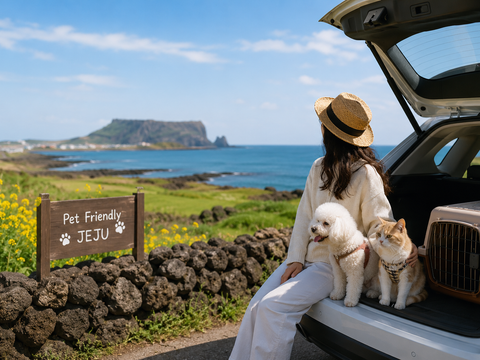
Jeju Island is fast becoming one of Korea's most pet-friendly destinations — but travelling there with a dog or cat takes more planning than you might expect. Here's how to get it right.
Every rock, every crater hill, every handful of rice on Jeju tells a story — if you know how to listen. Here's how to walk this island the way it was always meant to be walked: slowly, and with wonder.