
Jeju Island
Jeju Weather Won't Ruin Your Trip — If You Plan Like This
Jeju's famously moody weather can unravel even the best-laid itinerary. Here's how to build a trip that bends with the forecast instead of breaking against it.
Odin Park
A rental car is practically non-negotiable for exploring Jeju Island — but rent without doing your homework and you could end up with surprise charges, insurance headaches, or a shuttle bus eating into your first afternoon. Here's what to sort out before you hand over your card details.
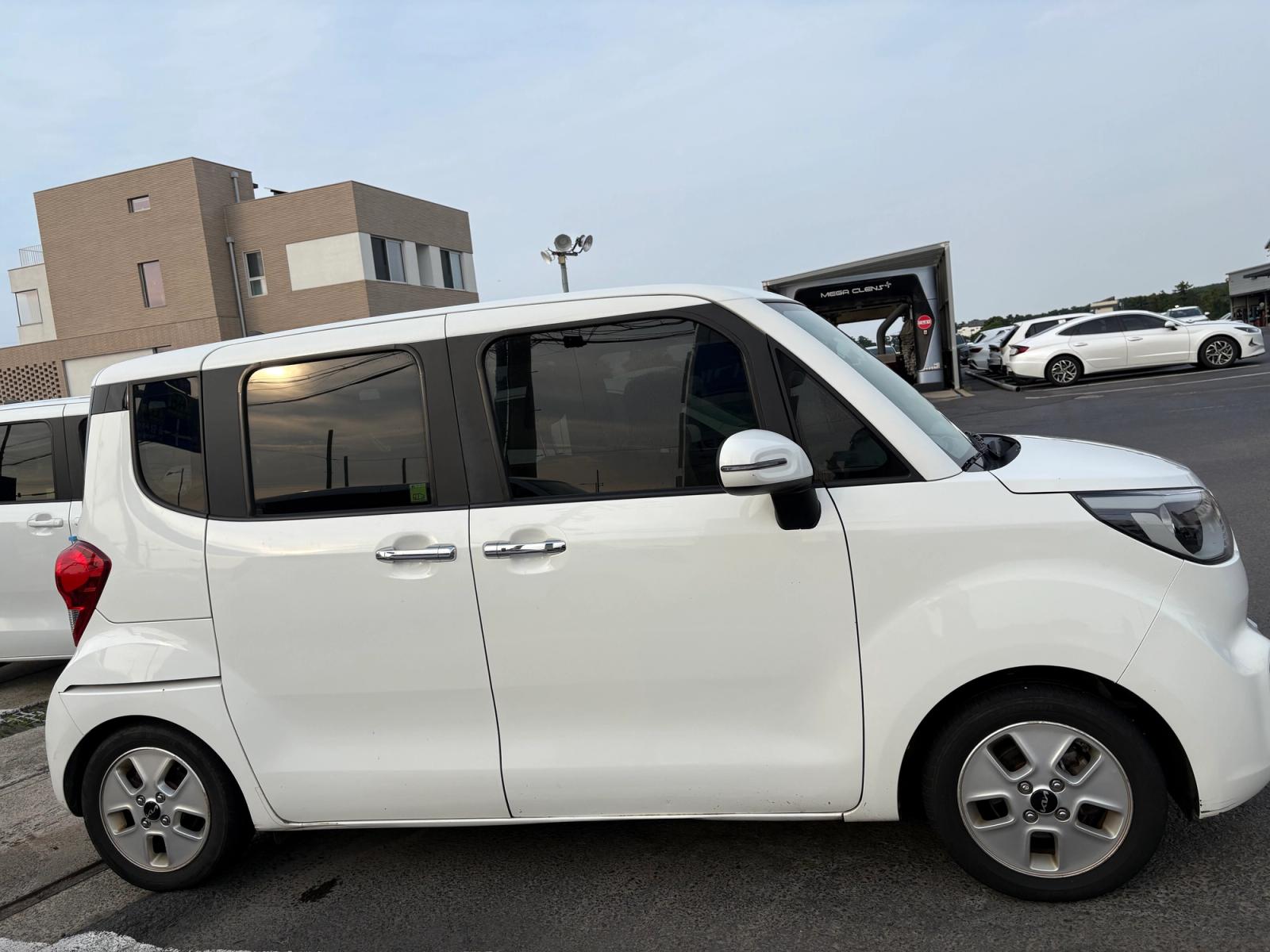
Jeju's public transport network is charming in its way, but it won't get you to that secluded waterfall or the sunrise viewpoint you've been saving on your phone. For most visitors, a rental car isn't just convenient — it's essential. That said, renting on Jeju works a little differently from the mainland, and there are a handful of things worth knowing before you click "confirm booking."
Start with the insurance — and read the fine print
Most rental rates include basic own-damage cover as standard, but the coverage limits and excess amounts vary wildly between companies. Budget operators tend to advertise attractively low headline prices while quietly setting high excess fees — meaning if you scrape a bumper, you could be on the hook for a lot more than you bargained for.
When comparing prices, don't stop at the daily rate. Look at what the own-damage cover actually includes, what your excess would be in an accident, and how much it costs to upgrade to a fully comprehensive option (called *wanjeon jaja* in Korean — literally "complete own-damage," meaning a zero-excess policy). You'll also want to check what's covered for damage to a third party's vehicle or property, and what the personal liability limits look like. Sorting this out upfront is far easier than arguing about it after the fact.
Photograph everything when you pick up the car
Jeju's rental fleet turns over fast, and cars often carry the scars to prove it — minor scratches, small dents, the odd mystery scuff. If you don't document existing damage before you drive away, there's a real chance it gets attributed to you when you return the vehicle.
The moment you receive your car, do a full walk-around: all four sides, underneath if you can manage it, and the interior too. Photograph and video everything, even the smallest mark. Better still, flag any damage to a staff member on the spot and ask for it to be noted in writing. It takes five minutes and could save you a very unpleasant conversation on your last day.
Check the cancellation policy — especially in peak season
During the summer holidays or around Korean national holidays like Chuseok (the harvest festival) and Seollal (Lunar New Year), demand for rental cars on Jeju surges and prices spike accordingly. Some companies also tighten their cancellation terms during these periods, with penalties that kick in earlier than you might expect.
If your travel dates aren't fully locked in, look for operators offering free cancellation as a priority — or at minimum, read the refund policy carefully before you book. Finding out that a date change costs you half the rental fee is nobody's idea of a good time.
Work out the fuel situation before you return the car
The standard arrangement is full-to-full: you receive a full tank and return a full tank. Simple enough — except that there isn't always a petrol station conveniently located near your drop-off point. Build a fuel stop into your route on the final day rather than leaving it to chance.
Some companies offer to handle the refuelling on your behalf for an additional fee, but this convenience charge can end up costing more than just filling up yourself. It's worth doing the rough maths beforehand.
If you're travelling with young children, sort the car seat early
South Korean law requires children to use an appropriate car seat — this isn't something you can sidestep. The problem is that availability varies considerably between rental companies: different operators stock different seat types for different age groups, and the numbers are limited. If you need a car seat, request one at the time of booking, not on the day. Some companies include a baby or toddler seat at no charge; others charge a rental fee. Either way, waiting until you arrive at the counter is a gamble you don't want to take.
Know how the airport pickup actually works
A handful of rental companies have counters inside or directly adjacent to Jeju Airport, but many operate from off-site locations and run shuttle buses to their depots. After a flight, the last thing you want is to be standing outside arrivals trying to figure out which shuttle is yours and how long the wait will be.
Check your booking confirmation for the pickup procedure and the shuttle frequency before you travel. That way, you can build the transfer time into your first day's plans rather than losing an hour to confusion.
A rental car genuinely transforms a Jeju trip — the freedom to pull over at a roadside haenyeo (the island's famous female free-divers) selling fresh sea urchin, or to chase the light along the coast without worrying about timetables, is hard to beat. But the small print around insurance, vehicle condition, and peak-season policies is the kind of thing that can quietly derail an otherwise perfect trip. Spend twenty minutes on these checks before you book, and the car becomes exactly what it should be: a pleasure, not a source of stress.
Jeju's famously moody weather can unravel even the best-laid itinerary. Here's how to build a trip that bends with the forecast instead of breaking against it.
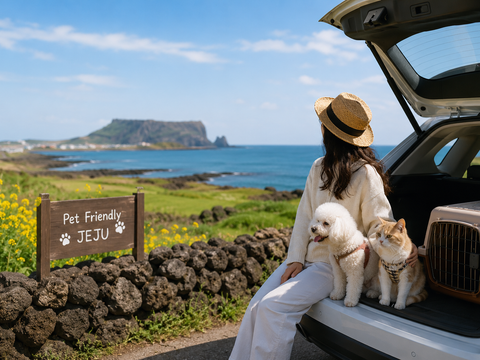
Jeju Island is fast becoming one of Korea's most pet-friendly destinations — but travelling there with a dog or cat takes more planning than you might expect. Here's how to get it right.
Every rock, every crater hill, every handful of rice on Jeju tells a story — if you know how to listen. Here's how to walk this island the way it was always meant to be walked: slowly, and with wonder.