
Jeju Island
Jeju Weather Won't Ruin Your Trip — If You Plan Like This
Jeju's famously moody weather can unravel even the best-laid itinerary. Here's how to build a trip that bends with the forecast instead of breaking against it.
Odin Park
The internet is full of Jeju highlights — but the island looks completely different when you follow the routes that actual residents use. Here's the insider playbook that rarely makes it into the guidebooks.
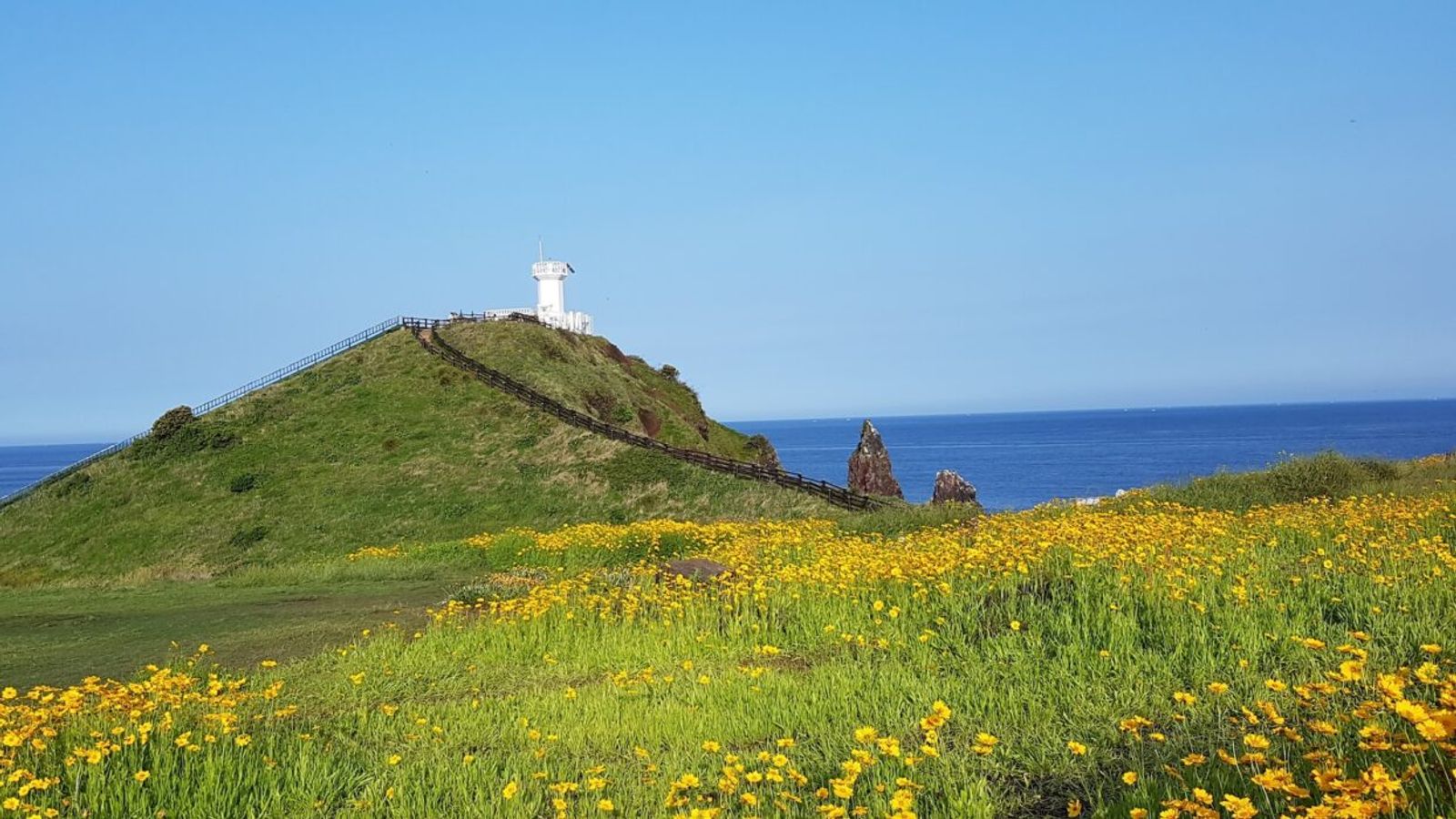
You can find all the usual Jeju attractions with a quick search, but people who've lived on the island for years move through it in an entirely different way. What follows is a collection of their practical, unvarnished tips — the kind that don't tend to make it onto the laminated pages of a travel brochure.
At Dongmun Market, head straight for the fish corner
Dongmun Traditional Market is well known enough that most visitors tick it off their list — but the real find is the raw fish section tucked inside. Here, you can buy *hoe* (sliced raw fish, Korea's answer to sashimi) at prices that are substantially lower than the tourist-facing restaurants nearby, which is precisely why locals keep coming back. The standard move is to have the fish prepared at the stall, then take it to one of the seating areas in or around the market, or back to wherever you're staying. Prices aren't always fixed, so it pays to browse a few stalls and compare before you commit — a little friendly back-and-forth often gets results.
The best coastal spots don't have signs
The famous beaches — Hyeopjae on the west coast, Hamdeok in the north — are beautiful, but in peak season they're heaving. The beaches that locals actually favour tend to announce themselves with nothing more than a small turnoff and the sound of the sea. The stretch of coastline near Sindo Port in western Jeju is one such place: low-key, easy to miss, and seldom crowded. These spots often don't show up in detail on map apps, so it's worth doing your research before you head out and noting down exact coordinates. Come at sunset, and the lack of crowds makes the light feel almost private.
When choosing a cave to visit, go by size, not fame
Manjanggul is Jeju's most celebrated lava tube — a UNESCO-listed cave of genuinely staggering proportions — but it's far from the island's only cave worth exploring. Around the village of Seonheul in the northeast, natural cave formations weave through dense forest in ways that feel primordial and quietly eerie. These spots are less visited and carry none of the tour-group atmosphere of the big-name sites. One practical note: lighting and safety infrastructure at lesser-known caves can be minimal, so check whether they're open to the public and how to access them safely before you go.
Every neighbourhood has its own local restaurant — and it's not the famous one
The dining strips of Jungmun and central Seogwipo draw the crowds, but the neighbourhoods that see fewer tourists — places like Jocheon and Hamdeok in the north — have their own quietly excellent local restaurants that have been feeding the same regulars for years. These places tend to be more affordable, and their menus reflect what people around here actually want to eat day-to-day rather than what tourists expect to find. As a rough rule of thumb: if the signage looks like it hasn't been redesigned in a decade, that's often a promising sign.
Drive the west, walk the east
Jeju's western coastline is tailor-made for a slow drive — roads like the Aewol coastal route follow the shore for miles, and dedicated cycling and walking paths run alongside them, making this part of the island manageable even without a rental car. The east is a different proposition: here, the landscape is defined by volcanic hills called *oreum* (small, gently rounded cinder cones that dot the island) and dramatic coastal clifftops, most of which are best experienced on foot. Structuring your trip around this east-west divide — wheels in the west, boots in the east — makes for a far more efficient and satisfying itinerary.
The way locals move through Jeju isn't glamorous, exactly. But it's quieter, cheaper, and far closer to the actual texture of island life. Shift your timing by an hour, change your route by a few kilometres, and the Jeju that everyone talks about starts to give way to the one worth remembering.
Jeju's famously moody weather can unravel even the best-laid itinerary. Here's how to build a trip that bends with the forecast instead of breaking against it.
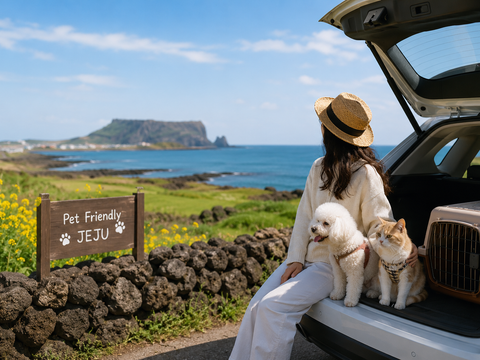
Jeju Island is fast becoming one of Korea's most pet-friendly destinations — but travelling there with a dog or cat takes more planning than you might expect. Here's how to get it right.
Every rock, every crater hill, every handful of rice on Jeju tells a story — if you know how to listen. Here's how to walk this island the way it was always meant to be walked: slowly, and with wonder.