Jeju Island
Jeju Weather Won't Ruin Your Trip — If You Plan Like This
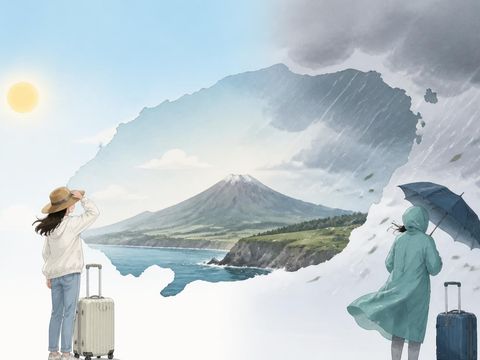
Jeju's famously moody weather can unravel even the best-laid itinerary. Here's how to build a trip that bends with the forecast instead of breaking against it.
Odin Park
Just a short ferry ride off Jeju's eastern coast, Udo is a compact volcanic island where white coral beaches and jet-black lava shores sit within walking distance of each other — and the peanut ice cream is non-negotiable.
Introduction
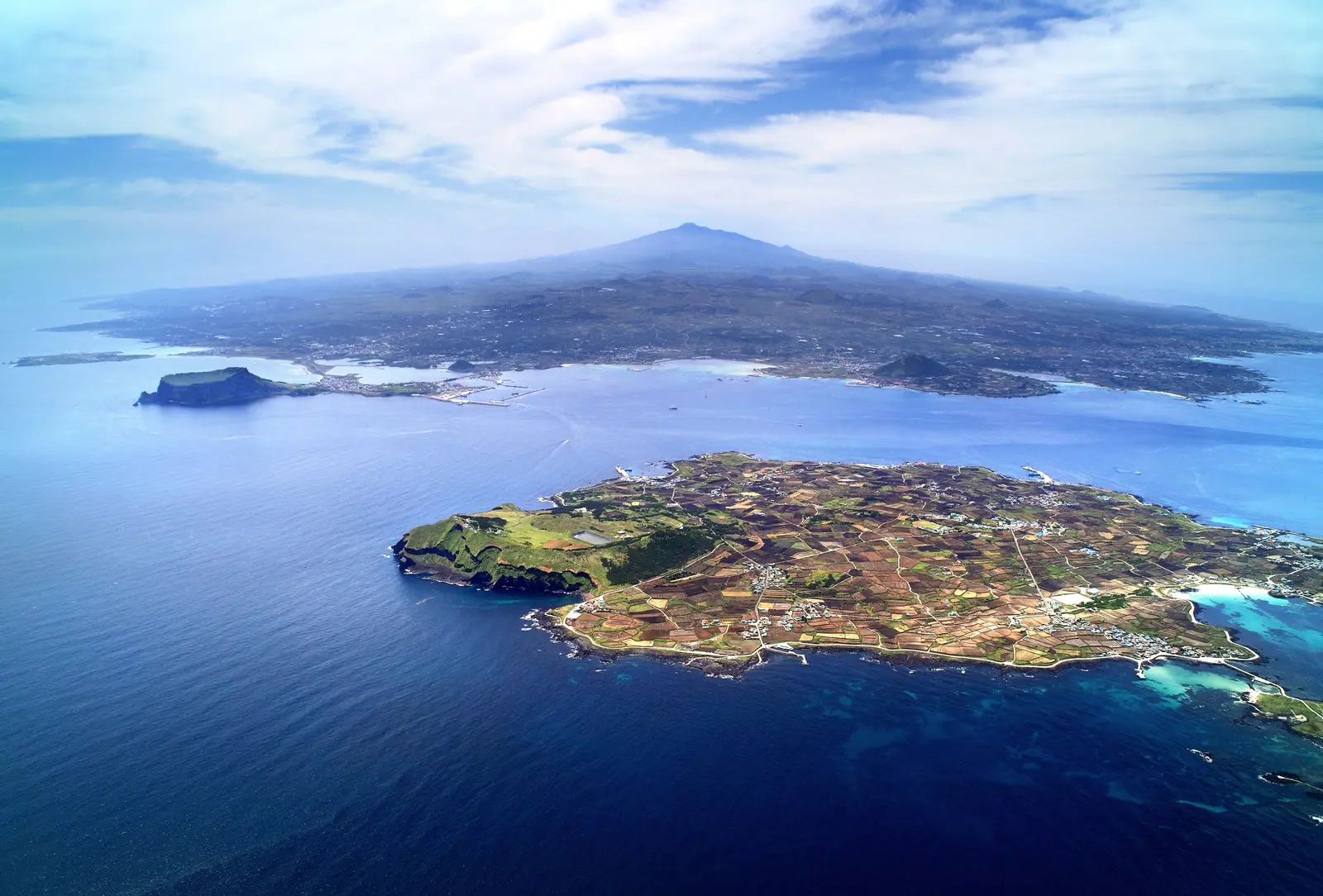
Udo sits just off Seongsan, on Jeju's eastern tip — a fifteen-minute ferry ride from the mainland coast, yet somehow a world of its own. The island's name is written with the Chinese character for "cow" (牛, *u*), a nod to its silhouette when seen from the sea: a great ox lying peacefully on its side. What greets you when you arrive, though, is anything but sleepy. Udo is a place of vivid geological contrasts — gleaming white coral beaches on one side, dark volcanic rock on the other — and it forms one half of Jeju's essential eastern itinerary, alongside the iconic sunrise peak of Seongsan Ilchulbong.
The Story of the Island
Even locals from Jeju's main island have long referred to Udo as an "island within an island" — somewhere that feels distinctly set apart, with its own rhythms and its own landscape logic. The volcanic origins of the island have produced a coastline that changes character dramatically as you walk around it. Most remarkable is the fact that Seobin Baeksa (서빈백사), a beach of fine white coral sand so pale it almost hurts to look at in full sun, and Geommeolle Beach (검멀레해변), a moody stretch of black sand and pebbles, are within easy walking distance of each other. Geologists, apparently, find this rather exciting — and honestly, so do the rest of us.
Udo has also been a stronghold of *haenyeo* culture — the tradition of female free-divers who harvest shellfish and sea vegetables from the ocean floor without breathing equipment. The practice is inscribed on UNESCO's intangible cultural heritage list, and Udo, relative to its small population, has long had a high concentration of these divers. Their influence on the island's food culture remains vivid: fresh seafood is everywhere, and the island's most celebrated local product, Udo peanuts, has its own story rooted in the land itself. The combination of nutrient-poor volcanic soil and constant sea breezes produces a peanut with an intensely concentrated, almost sweet flavour that you won't find anywhere else. Arrive on Udo and you will encounter these peanuts in every possible form within about ten minutes.
As a tourist destination, Udo's rise to fame is relatively recent. The fact that you can only reach it by ferry — a limitation that has never quite been solved away — has perversely worked in its favour, lending the island an aura of unspoiled remoteness that keeps drawing people in. Social media did the rest: images of peanut ice cream cones, electric car tours along the coastal road, and those impossibly photogenic beaches spread quickly, and Udo is now a fixture on the itinerary of younger Korean travellers and international visitors alike.
Getting There and Getting Around
Ferries to Udo depart from Seongsan Port and Jongdal Port, and the crossing takes around fifteen minutes. Vehicles can be loaded onto the ferry, but given how small the island is — and how congested it gets in peak season — bringing a car rarely makes sense. More importantly, private car access on the island is actively restricted, which means the real question on arrival is whether you want to rent an electric car, a scooter, or a bicycle. All three are widely available near the ferry dock. For Udobong, the hill at the island's highest point, most visitors opt for a short electric car tour or simply walk up — and the view from the top is the one detail that surprises almost everyone: you get a full reverse-angle view of Seongsan Ilchulbong, the famous crater peak you likely spotted from the ferry dock, seen now from across the water in a way that most Jeju visitors never experience.
A few practical notes worth keeping in mind: ferry schedules change seasonally and are subject to cancellation in bad weather, which on Jeju can arrive without much warning. Build flexibility into your plans. If you're travelling with young children, it's worth checking ferry timetables and transport rental availability before you go rather than on the day. The shallow sections of Seobin Baeksa beach are generally considered safe and manageable for paddling with small kids.
On the food front, expect to spend a little more than you would on the Jeju mainland — island logistics push prices up, as they tend to do everywhere. That said, Udo peanut ice cream is genuinely worth whatever they're charging for it. Peanut *makgeolli* (a milky, lightly fizzy Korean rice wine brewed here with local peanuts) is the other thing worth seeking out, and pairs surprisingly well with a plate of fresh seafood from one of the harbour-side restaurants.
Our Verdict
Accessibility: ★★★☆☆ Ferry-dependent, and peak season queues for both the boat and the rental vehicles can eat significantly into your day. An early start is strongly advised.
Scenery: ★★★★★ The juxtaposition of white coral beach and black volcanic coast is genuinely unlike anywhere else in Korea — or, for that matter, most places on earth.
Crowds: ★★☆☆☆ In high season (late spring through summer), Udo gets very busy indeed. The ferry, the beaches, the rental shops — all of it. Consider visiting in the shoulder season if you can.
Photo Opportunities: ★★★★★ Seobin Baeksa, the Udobong summit viewpoint, the black pebble beach at Geommeolle — the island hands you a great shot roughly every hundred metres. Come with a full battery.
Jeju's famously moody weather can unravel even the best-laid itinerary. Here's how to build a trip that bends with the forecast instead of breaking against it.
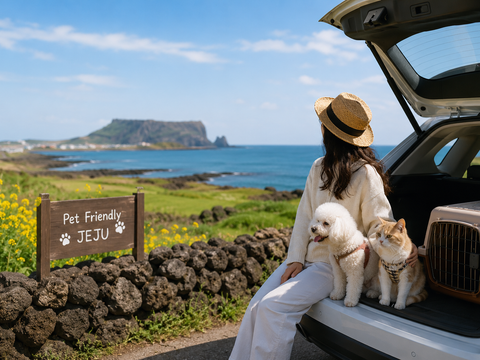
Jeju Island is fast becoming one of Korea's most pet-friendly destinations — but travelling there with a dog or cat takes more planning than you might expect. Here's how to get it right.
Every rock, every crater hill, every handful of rice on Jeju tells a story — if you know how to listen. Here's how to walk this island the way it was always meant to be walked: slowly, and with wonder.